Introduction
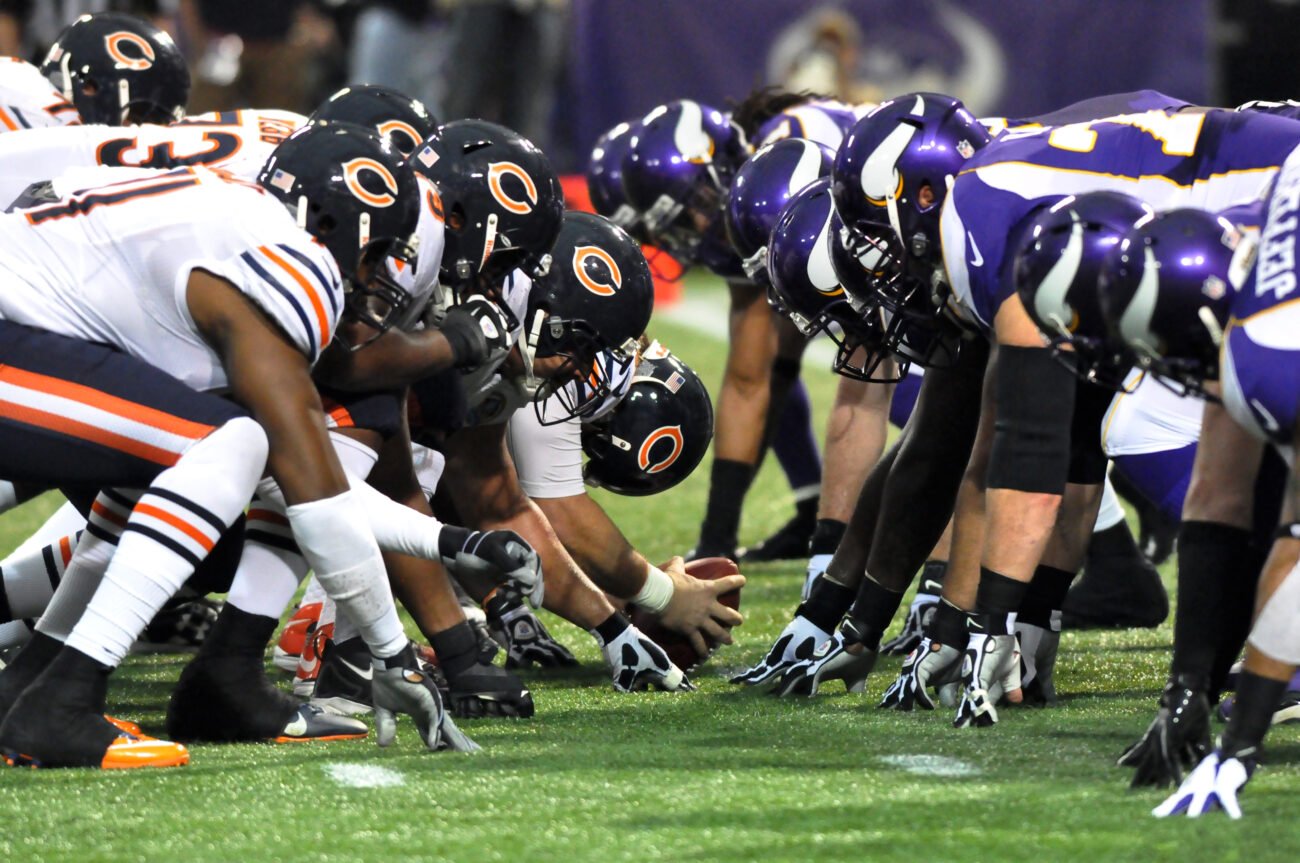
The Minnesota Vikings vs Chicago Bears Match Player Stats are long-standing NFC North rivals, making their matchups particularly interesting for fans who follow player statistics, offensive production, defensive performances, and individual milestones.
Their most recent completed regular-season meeting was the Bears’ 19–17 victory over Minnesota on November 16, 2025. The Vikings had also defeated Chicago 27–24 in the season opener earlier that year, creating an interesting split in the rivalry.
Vikings Quarterback Performance
J.J. McCarthy’s performance was an important part of Minnesota Vikings vs Chicago Bears Match Player Stats first meeting with Chicago in 2025. He completed 13 of 20 passes for 143 yards, two touchdowns, and one interception.
He also contributed 25 rushing yards and scored a rushing touchdown. His ability to contribute both through the air and on the ground made him one of Minnesota’s most important offensive players in that matchup.
Justin Jefferson’s Contribution
Justin Jefferson remained a major part of Minnesota Vikings vs Chicago Bears Match Player Stats offensive attack. Against Chicago in the 2025 opener, he caught four passes for 44 yards and a touchdown.
His touchdown reception demonstrated why opposing defenses have to account for him throughout a game. Even when his overall receiving yardage is modest, his ability to create scoring opportunities makes him one of the central figures in the Vikings-Bears rivalry.
Aaron Jones Sr. as a Receiving Threat
Aaron Jones Sr. provided an unusual combination of rushing and receiving production for Minnesota. He carried the ball eight times for 23 yards but also caught three passes for 44 yards and a touchdown. His longest reception covered 27 yards.
That receiving contribution showed how Minnesota Vikings vs Chicago Bears Match Player Stats could use its running back as a passing-game weapon rather than relying entirely on conventional rushing production.
Jordan Mason’s Rushing Role
Jordan Mason was another important Minnesota Vikings vs Chicago Bears Match Player Stats running back. In the season-opening game against Chicago, Mason carried 15 times for 68 yards, averaging more than four yards per attempt.
He did not score in that matchup, but his rushing workload helped Minnesota maintain balance. Mason later scored Minnesota’s first touchdown in the November meeting, rushing for 16 yards to bring the Vikings closer to Chicago.
T.J. Hockenson’s Receiving Numbers
T.J. Hockenson recorded three receptions for 15 yards in the September matchup. Although his yardage total was not particularly high, tight ends can influence games in ways that are not always reflected by receiving statistics.
Hockenson’s ability to operate underneath coverage can help create opportunities for wide receivers and running backs. His involvement remains an important statistic when evaluating Minnesota’s overall offensive structure.
Chicago’s Rushing Attack
Chicago received strong rushing contributions from both Caleb Williams and D’Andre Swift. Williams ran six times for 58 yards and a touchdown, while Swift carried 17 times for 53 yards.
The contrast between the two performances demonstrates the different ways Chicago could generate rushing production. Williams’ scrambling ability added explosive potential, while Swift provided a more conventional workload from the backfield.
D.J. Moore’s Contribution
D.J. Moore carried the ball three times for eight yards in the season opener. Although his rushing numbers were modest, his broader importance came from his role as a versatile offensive player. Chicago’s offense could use different formations and personnel groupings to create opportunities for its playmakers.
For player-stat analysis, Moore’s involvement illustrates why total offensive contribution cannot always be measured by one category.
Defensive Turning Point
One of the biggest statistical moments in the September game came from Chicago cornerback Nahshon Wright. He returned an interception 74 yards for a touchdown, extending Chicago’s lead to 17–6 early in the third quarter.
The play was especially significant because Minnesota Vikings vs Chicago Bears Match Player Stats eventually completed a fourth-quarter comeback and won 27–24.
Historical Rivalry
The Vikings and Bears have one of the NFL’s longest-running divisional rivalries. Minnesota Vikings vs Chicago Bears Match Player Stats The series began in 1961, and the teams have continued to meet regularly as NFC North opponents.
Minnesota holds the overall series advantage, while Chicago has the only postseason victory between the teams. This history adds significance to individual performances because every matchup contributes to a rivalry that spans generations.
What Player Statistics Reveal
Player statistics help explain the different ways each team can win. Minnesota can rely on McCarthy’s mobility, Jefferson’s receiving ability, and the versatility of its running backs. Chicago can use Williams’ dual-threat quarterback skills,
Swift’s rushing workload, and a varied receiving attack. Minnesota Vikings vs Chicago Bears Match Player Stats Defensive statistics, meanwhile, can reveal whether a team is capable of generating turnovers and creating momentum-changing plays.
Offensive Balance
Offensive balance is particularly important in Vikings-Bears games. A team that becomes too dependent on one player can become easier to defend. Minnesota’s ability to involve Jefferson, Jones, Hockenson, and its running backs gives the offense multiple options.
Minnesota Vikings vs Chicago Bears Match Player Stats similarly benefits from combining Williams’ passing and rushing ability with its backfield and receiving weapons. Balanced production can make it more difficult for opposing defenses to predict the next play.
Turnovers as a Deciding Factor
Turnovers can dramatically change a close rivalry game. The 74-yard interception return by Wright in the first meeting was a perfect example. Although Chicago eventually lost, the defensive touchdown gave the Bears a major advantage during the game.
In tight matchups, an interception or fumble can effectively create a short field or directly produce points. Minnesota Vikings vs Chicago Bears Match Player Stats Consequently, turnover statistics should always be considered alongside passing and rushing numbers.
Special Teams and Field Position
Special teams can also have an important influence. Field goals, punt returns, kick coverage, and field position can determine how easily an offense can score. In the 2025 meetings, both teams had opportunities to rely on their kickers during close stretches.
When games are decided by only two or three points, Minnesota Vikings vs Chicago Bears Match Player Stats even a single missed kick or poor punt can become significant.
Looking Ahead
The Vikings-Bears rivalry remains relevant because both organizations compete in the NFC North and regularly face each other during the regular season. The next scheduled regular-season meeting is set for September 20, 2026, at Soldier Field.
Minnesota Vikings vs Chicago Bears Match Player Stats statistics from previous meetings provide useful context, but future games will depend on current rosters, injuries, coaching decisions, and game-day execution.
Conclusion
Minnesota Vikings vs Chicago Bears Match Player Stats offer much more than a collection of numbers. They show how quarterbacks create plays, how running backs maintain offensive balance, how receivers turn opportunities into touchdowns, and how defensive players can change games with turnovers.
The Vikings’ 27–24 comeback victory and the Bears’ 19–17 rematch win demonstrated just how competitive this rivalry can be. As the teams continue their NFC North competition, individual performances will remain central to understanding each matchup, while statistics provide an effective way to measure the players who make the biggest impact.
You May Also Read: Best Pizza Rellena Near Me
